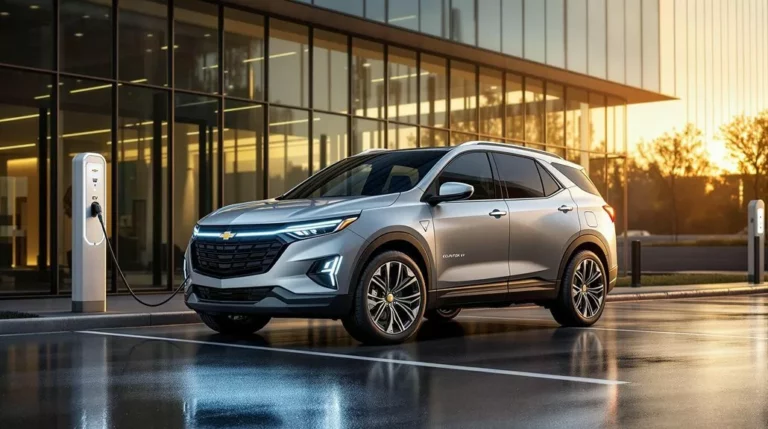

BYD has become the world’s largest plug-in car seller with 4.27 million electric and hybrid vehicles sold in 2024. The Chinese company surpassed Tesla by capturing 18% of the global EV market. BYD’s aggressive pricing strategy includes discounts up to 34%. The company employs over 650,000 people and operates more than 30 industrial parks. With new factories in Thailand, Indonesia, and Mexico, BYD’s expanding beyond China to reshape the global clean-energy transportation industry.
While Tesla once dominated headlines about electric vehicles, China’s BYD has quietly become the world’s largest seller of plug-in cars. The company captured 22% of the global plug-in electric vehicle market in 2023, compared to Tesla’s 13.2%. BYD’s rise shows how Chinese automakers have altered the EV industry.
BYD’s numbers tell an extraordinary story. The company sold 4.27 million new energy vehicles in 2024, representing 18% of the global EV market. Its battery electric vehicle sales jumped 25% that year, allowing BYD to overtake Tesla in pure electric car sales for the first time. The company’s combined sales of battery electric and plug-in hybrid vehicles grew 47% year-over-year in 2024.
BYD sold 4.27 million electric vehicles in 2024, overtaking Tesla in pure electric car sales globally.
The momentum continued into 2025. BYD sold 377,628 vehicles in June 2025 alone, marking 10% growth from the previous year. In the first half of 2025, total sales reached 2.1 million units. The company hit another milestone when it sold over 1 million EVs in China during May 2025, cementing its domestic market leadership with a 36% share of China’s new energy vehicle segment. However, Chinese regulators have criticized the industry’s “rat-race competition” and urged companies to exercise self-regulation on aggressive pricing strategies. As competition intensifies, manufacturers are exploring innovative ways to enhance customer engagement, such as integrating advanced technologies into their offerings. Rivian has capitalized on this trend by rolling out new rivian mobile app features, allowing users to track their vehicle’s performance and charging status more efficiently. This shift towards digital connectivity is expected to shape consumer preferences in the evolving automotive landscape.
BYD’s massive scale sets it apart. The company employs over 650,000 people across more than 30 industrial parks. This vertical integration lets BYD control its supply chain and cut costs. The strategy has helped the company offer aggressive discounts, including price cuts up to 34% in May 2025. While these discounts squeeze profit margins, they’ve helped BYD gain market share rapidly.
The company hasn’t limited itself to China. BYD is pushing into European markets, though growth there has been slower than at home. China’s overall EV market remains BYD’s stronghold, with Chinese manufacturers selling over 11 million electric vehicles domestically. BYD’s international expansion includes new manufacturing plants under construction in Thailand, Indonesia, Uzbekistan, and Mexico to serve regional markets.
Competition remains fierce. Tesla still leads in pure battery electric vehicles globally, while Chinese rival Geely saw its sales surge 59% recently. As governments worldwide push for cleaner transportation, BYD’s combination of scale, pricing power, and technology positions it as a major force shaping the industry’s future.
Frequently Asked Questions
What Is Byd’s Current Stock Price and Market Capitalization?
There are two companies with similar names. Boyd Gaming trades at $84.11 on the NYSE.
BYD Company A, the Chinese electric vehicle maker, trades at 331 Chinese yuan. That’s down 18% from its May peak of 405 yuan.
BYD’s Hong Kong shares dropped to HK$124, falling 21% from recent highs.
The companies’ market caps weren’t provided in the latest reports.
Boyd Gaming has $3.5 billion in debt.
How Can I Invest in BYD Shares From Outside China?
Foreign investors can buy BYD shares through several methods.
They can use international brokers like Interactive Brokers or eToro to access Hong Kong’s stock exchange where BYD trades as 01211.HK.
U.S. investors can purchase BYDDY shares on OTC markets.
Some platforms offer commission-free trading and fractional shares.
Investors need to verify their identity, fund their accounts, and consider currency exchange fees when trading international stocks.
What Are Byd’s Main Competitors in the Global EV Market?
Electric vehicle makers compete fiercely worldwide.
Tesla leads America’s EV market with 128,000 cars sold last quarter. China’s BYD recently beat Tesla in Europe, selling more vehicles there. As competition intensifies, other manufacturers are positioning themselves to capture a larger share of the market. BYD is expected to introduce some of the cheapest electric cars in 2025, further challenging Tesla’s dominance. With evolving technology and consumer preferences, the dynamics of the EV landscape are likely to shift significantly in the coming years.
NIO targets wealthy buyers with luxury EVs and battery-swapping tech.
Lucid Motors builds expensive electric sedans but struggles with production.
Rivian makes electric trucks for thrill-seekers.
These companies battle for customers across different countries and price ranges.
Does BYD Offer Electric Vehicles for Purchase in My Country?
BYD sells electric cars in over 70 countries worldwide.
They’re strong in China, Europe, and Australia. Popular models include the Atto 3 SUV and Dolphin compact car.
Germany’s seeing big sales growth. They’re also expanding in Brazil and Thailand.
North America hasn’t seen much BYD action yet due to tough competition.
To check if BYD’s available locally, buyers should visit the company’s website for their country.
What Is the Average Price Range of BYD Electric Vehicles?
BYD’s electric vehicles span a wide price range.
Budget models like the Seagull cost around $7,800-$11,000, while the Dolphin runs $9,700-$14,500.
Mid-range options include the Atto 3 SUV at $39,990-$44,990.
Premium sedans like the Seal range from $46,990-$61,990.
The company’s recently cut prices by $2,500-$4,500 across models.
Their lineup targets everyone from budget buyers to premium customers seeking alternatives to Tesla.